
Potty training basics is one of the first things every dog owner should learn. Many customers tell us at Doggie Steps that their new puppy has been perfect—no accidents, chewing, digging, or jumping. We call this the “honeymoon period.” This is normal as your puppy settles in, but soon enough, most puppies will start showing these behaviors, especially having accidents in the house.
Learning the basics of potty training before bringing home a new puppy can make the process much smoother. With proper preparation, you’ll be better equipped to teach your dog where and when to go. In this blog, we’ll walk through the key tips and steps to help you successfully potty train your dog.
Potty Training Basics to Know Before Getting Started
On average, it takes 4-8 months for your puppy to be fully potty trained. Any trainer or owner who says otherwise most likely had a miracle puppy. With extreme commitment and discipline, your timeframe could be shorter. A consistent routine and clear expectations will get your puppy trained fastest. By following the tips below, you’ll be calling the carpet cleaner less often.
Crate Training
Crate training is the most effective method to potty train your puppy. Having a crate teaches your dog about control. Not only will your dog learn not to potty where they sleep, but it will also keep your puppy calm, submissive, and safe when you’re gone. Their crate will become their safe space in your home, much like your bedroom is a comfortable space for you.
Choose a crate that allows your puppy just enough room to stand up, stretch out, and turn around comfortably. The crate should not be so large that your puppy can use one end as a bathroom and the other to sleep. Most crates include a partition, so you can adjust the available space as your puppy grows. This helps ensure they form the right potty habits as they transition from a small puppy to their adult size.
For treats and chews in the crate, use only a hard bone. While potty training, avoid bedding in the crate so your puppy doesn’t confuse it with a pee-pad.
Learning Your Puppy’s Potty Signals
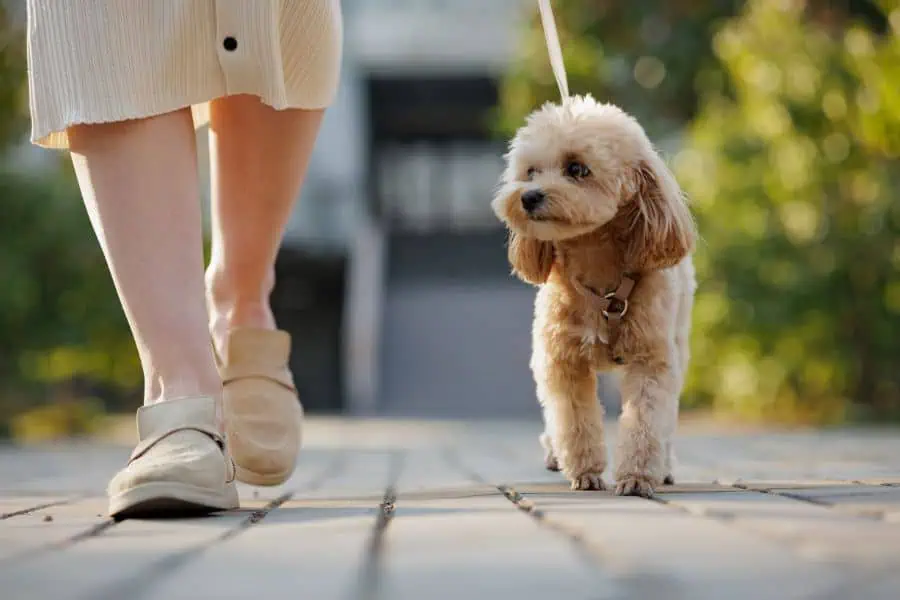
One of the most important potty-training basics is learning to recognize when your puppy is getting ready to eliminate. If you watch your dog closely for the following signs, it almost always means they are about to use the bathroom, whether they’re inside or outside.
Common potty signals include:
- Sniffing the ground
- Walking in circles
- Suddenly stopping play
- Wandering toward doors
- Whining or pacing
The moment you notice your puppy doing any of these things, immediately take them to their designated potty spot outside. The faster you respond, the easier it will be for your pup to make the connection between needing to go and doing it outside.
Building a Routine and Rewarding Success
The biggest factor in successful puppy potty training is having a clear routine. It’s important to understand that puppies can only hold their bladders for so long. To calculate how long they can hold it, add one hour to their age in months. For example, a two-month-old puppy can typically hold their bladder for about three hours before needing a potty break.
To help prevent accidents, we typically tell owners to take their puppy outside about 30 minutes after they eat, drink water, take a nap, playtime, and anytime after being in the crate. Consistency is how your puppy will learn expected times and places for bathroom breaks.
It’s also important to designate a specific “potty spot” outside and bring your puppy to that same location every time. Dogs rely heavily on scent, and returning to the same spot helps them understand that this is where they should eliminate.
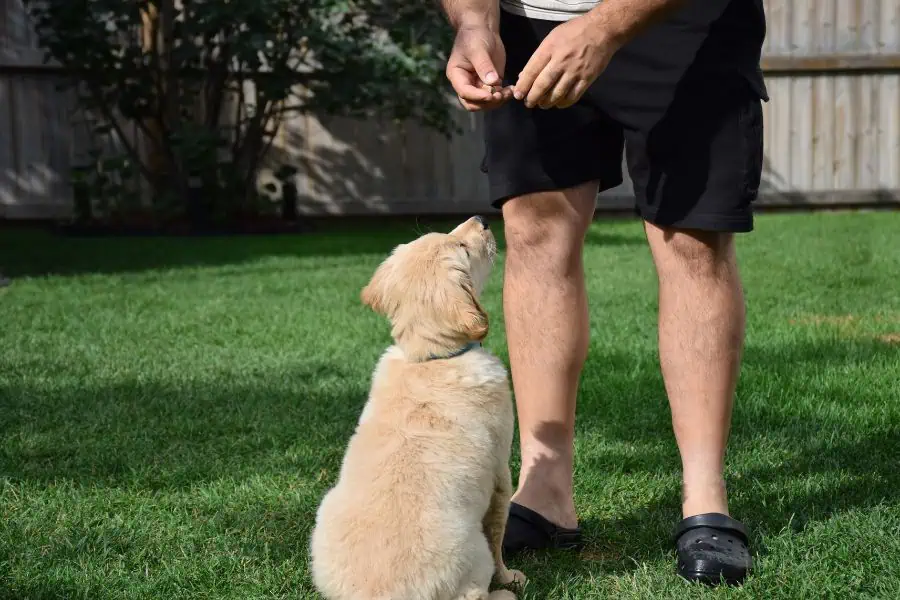
When your puppy goes potty in the correct place, reward them immediately with praise and a small treat. Timing matters, so make sure the reward happens right after they finish going. This helps your puppy clearly connect the reward with the correct behavior.
Over time, this combination of routine, repetition, and positive reinforcement will help your puppy understand exactly where they should go, making potty training much easier for both of you.
Cleaning Up Accidents to Prevent Future Ones
During the early stages of potty training, accidents are bound to happen. Your puppy is still learning and adjusting to their environment. Punishment after accidents will only set you back in your training and make things difficult for you and your furry friend.
If your pup has an accident inside the house, it is imperative that you clean it up properly. Since dogs rely so much on their keen sense of smell, they may be likely to return to the same spot in the house to go potty again if it’s not wiped away. This is due to enzymes present in their urine.
To eliminate this, use an enzyme-based cleaner specifically formulated to clean up pet accidents. This will help prevent repeated mistakes and further support your dog in going to the right places outside.
House training your dog can take patience, consistency, and a clear plan. As long as you understand the fundamental potty training basics: crate training, knowing the potty training signals, building a routine, and properly cleaning up accidents, you will help your puppy develop good habits a lot quicker!
We here at Doggie Steps Dog Training in Phoenix, Arizona, are here and ready to support you through every stage of puppy training. You do not have to do this alone. Check out our puppy training services if you ever need assistance. Our puppy training programs are designed to help set your dog up for long-term success!

Since 2005, Mark Siebel has trained over 6000 satisfied K’9’s and customers alike. The goal has always been to show owners how to properly integrate their dog into the home setting. Consulting on what breed of dog to buy, where to buy/rescue from, preparing your home for your new puppy and health/nutrition are just a few ways DOGGIE STEPS helps its customers.