

Last Updated on August 21, 2026 by
The benefits of socializing your dog go far beyond helping your dog make friends. Thoughtful socialization helps dogs learn to respond calmly and confidently to people, animals, sounds, surfaces, places, and everyday situations they will encounter throughout their lives. For puppies, those positive experiences are especially important during the first few months, but dogs of every age can continue learning.
At Doggie Steps Dog Training, we help families throughout Chandler, Phoenix, Gilbert, Mesa, Scottsdale, Tempe, Paradise Valley, and the surrounding Phoenix metro area build practical skills that make everyday life with a dog easier. Socialization is part of that foundation, whether you have a new puppy, an adolescent dog, or an adult dog that needs more confidence around the world.
What Does Socializing a Dog Actually Mean?
Dog socialization is the process of helping a dog develop positive or neutral associations with the things they may encounter in normal life. The goal is not to make your dog greet every person or play with every dog. A well-socialized dog should be able to notice something new, process it, and remain comfortable enough to respond to you.
Healthy socialization can include positive exposure to:
- Adults, children, people wearing hats or uniforms, and people using mobility aids
- Calm, healthy, appropriately matched dogs
- Car rides, traffic, bicycles, delivery vehicles, shopping carts, and other movement
- Doorbells, household appliances, construction sounds, thunder recordings, and other everyday noises
- Different walking surfaces, stairs, grass, gravel, tile, ramps, and safe outdoor environments
- Gentle handling of paws, ears, mouth, collar, and body to prepare for grooming and veterinary care
- New places, visitors, patios, training environments, and calm public settings
Quality matters more than simply collecting as many exposures as possible. If a puppy is frightened, trapped, or overwhelmed, the experience can work against the goal. Socialization should be gradual, safe, and paired with things your dog enjoys.
Why Is Early Puppy Socialization So Important?
The American Veterinary Society of Animal Behavior identifies the first three months of life as the primary and most important period for puppy socialization. During this developmental window, puppies are especially receptive to learning about new people, animals, environments, and experiences.
A 2022 systematic review of canine socialization research found that inadequate puppy socialization is associated with a greater risk of problematic behavior in adulthood. Another 2022 study found that carefully designed early-life challenge exercises, including novel objects and controlled sounds, were associated with bolder responses, less startle, faster recovery after a loud noise, and stronger problem-solving performance at 6 to 7 weeks of age. The researchers also noted that continued experience is likely important for lasting effects.
More recent research continues to emphasize the importance of early-life experience. A 2024 study of young dogs found links between puppyhood experiences and later owner-reported problem behaviors, while a 2024 review of dog-human sociability highlighted early-life experiences as an important factor in how dogs develop social behavior toward people.
Should You Wait Until Your Puppy Is Fully Vaccinated to Socialize?
Not necessarily. This is one of the biggest areas where puppy advice has changed. The goal is to balance behavioral development with infectious-disease prevention.
AVSAB states that puppies can generally begin puppy socialization classes as early as 7 to 8 weeks of age when appropriate health precautions are followed. Their guidance recommends administering at least one set of vaccines at least 7 days before the first class, giving a first deworming, and keeping vaccines current throughout the class. Your veterinarian should help you decide what is appropriate for your individual puppy and local disease risk.
The Arizona Humane Society similarly encourages early socialization while reducing health risks by choosing healthy, vaccinated playmates and clean, well-maintained training environments that require appropriate vaccination.
Safe Puppy Socialization Before the Vaccine Series Is Complete
Before your veterinarian clears your puppy for higher-risk public areas, you can still create valuable experiences. For example:
- Invite calm people to your home for short, positive visits.
- Arrange controlled interactions with healthy, vaccinated dogs whose behavior you know.
- Carry your puppy or use a clean stroller or carrier in appropriate public settings so they can observe the world without coming into contact with contaminated ground.
- Practice car rides and calm observation from a safe location.
- Introduce household sounds, grooming tools, various surfaces, and gentle handling of the body at home.
- Use a reputable puppy class with sanitation and vaccination protocols that fit your veterinarian’s recommendations.
Avoid uncontrolled contact with unknown dogs and high-traffic dog areas until your veterinarian says your puppy is ready. In Chandler, city dog parks require dogs to be vaccinated, and puppies must be older than 4 months to use them.
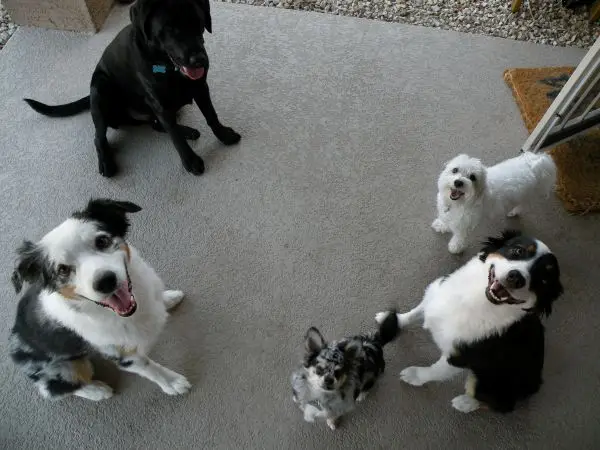
7 Benefits of Socializing Your Dog
1. Socialization Can Build Confidence
Positive experiences teach your dog that new things do not automatically mean danger. A confident dog is often better able to recover from surprises and look to their handler for guidance.
2. It Can Reduce Fear Around Everyday Life
Doorbells, visitors, traffic, children, veterinary visits, grooming, and unfamiliar surfaces can be stressful for a dog with little experience. Gradual exposure helps make these situations more predictable.
3. It Helps Dogs Learn Appropriate Social Skills
Socialization can help dogs learn how to be around people and other dogs without becoming overexcited, fearful, or pushy. Remember, successful socialization can mean calmly passing another dog, not necessarily playing with that dog.
4. It Makes Training Easier in New Environments
A dog that can stay emotionally regulated in the presence of distractions is better able to respond to cues such as sit, stay, come, leave it, and heel. This is one reason socialization and obedience training work so well together.
5. It Can Make Veterinary and Grooming Care Less Stressful
Teaching your dog to accept gentle handling of paws, ears, mouth, coat, and body can make routine care more manageable. Keep handling brief, reward cooperation, and stop if your dog becomes significantly uncomfortable.
6. It Strengthens Communication Between You and Your Dog
Socialization gives you repeated opportunities to learn your dog’s body language. You begin to recognize when your dog is curious, comfortable, uncertain, overstimulated, or ready for a break.
7. It Helps Prepare Your Dog for Life in the Phoenix Metro Area
Dogs living in Chandler and the East Valley encounter busy neighborhoods, delivery traffic, patios, parks, desert surfaces, seasonal events, and extreme summer heat. Practicing calm behavior in realistic local environments helps your dog develop useful everyday skills.
How to Socialize Your Dog Without Overwhelming Them
Good socialization is not forced exposure. Watch your dog’s body language and work at a distance where they can remain comfortable, take food or engage with you, and recover quickly.
- Start small. One calm new experience can be more valuable than a crowded outing.
- Pair new experiences with rewards your dog values, such as food, praise, toys, affection, or play.
- Give your dog space. Do not force greetings with people or dogs.
- Keep sessions short, especially for young puppies.
- Increase difficulty gradually. Add distance, duration, movement, or distraction one piece at a time.
- End on a good note. Stop before your dog becomes exhausted or overwhelmed.
- If your dog shows persistent fear, reactivity, or aggression, work with a qualified professional and, when appropriate, speak with your veterinarian.
Socializing Dogs in Chandler and Phoenix: Remember the Heat
Arizona adds an important local consideration: heat. During hot months, outdoor socialization should be planned carefully. Maricopa County recommends limiting outdoor time and choosing cooler mornings or evenings. Hot pavement can injure paws, and excessive heat can quickly become dangerous.
That does not mean socialization has to stop during summer. Use climate-controlled environments, short car-based observation sessions, safe indoor training, shaded areas when temperatures permit, and brief outings during cooler parts of the day. Always prioritize your dog’s safety over completing an exposure checklist.
Can an Adult Dog Still Be Socialized?
Yes. Adult dogs can continue learning and building new associations. The process may be slower for a dog with limited positive experience, and the goal may be calm neutrality rather than enthusiastic interaction.
If an adult dog is fearful or reactive, flooding them with intense exposure is not the answer. Controlled distance, predictable training, appropriate rewards, and professional guidance can help the dog develop safer, more manageable responses.
Common Dog Socialization Mistakes to Avoid
- Assuming socialization means your dog must greet everyone
- Taking a young puppy to high-risk dog areas before veterinary clearance
- Forcing a frightened dog closer to the thing they fear
- Allowing rough or poorly matched dog interactions
- Doing too much in one outing
- Punishing fear, growling, or other warning signals instead of addressing the underlying discomfort
- Stopping socialization completely after puppyhood
Frequently Asked Questions About Dog Socialization
The most important socialization period is during the first three months of life. Safe, positive exposure should begin early and continue throughout puppyhood and adulthood.
Often, yes, with appropriate precautions. AVSAB supports early puppy socialization before the vaccine series is complete when health and sanitation safeguards are followed. Ask your veterinarian for advice based on your puppy’s health and local disease risk.
No. Dog parks are only one possible environment, and they are not appropriate for every dog or every puppy. Socialization includes calm exposure to people, sounds, surfaces, handling, vehicles, places, and other dogs in controlled settings.
What if my dog does not want to meet other dogs?
Your dog does not need to play with every dog to be well socialized. Calmly noticing and passing another dog can be an excellent goal. Respecting your dog’s comfort level helps build trust.
No. Adult dogs can learn new skills and develop more positive associations, although dogs with fear or reactivity may need a slower, more structured plan.
Professional Dog Socialization and Training in Chandler, AZ
Socialization works best when it is thoughtful, consistent, and matched to the individual dog. If you are unsure where to begin, or your dog is already showing fear, overexcitement, anxiety, or reactivity, professional training can help you create a safer plan.
Doggie Steps Dog Training provides puppy training, private in-home dog training, at-home training, and group dog training for families in Chandler, Phoenix, Gilbert, Mesa, Scottsdale, Tempe, Paradise Valley, and surrounding communities. Mark Siebel has more than 20 years of dog training experience and has worked with more than 7,000 dogs.
Ready to help your dog become calmer and more confident? Explore Doggie Steps training options or contact us to schedule a class today!
